I’ve always been drawn to the Nordic countries, probably because my paternal grandparents emigrated from Sweden to the USA in the late 19th century. In 2005 Joanna and I spent several days in Sweden following my grandmother’s journey from the village of her birth, Tidivads, to Göteborg, from where she departed for Boston on May 2, 1897. (see A Walk Back In Time). On that trip, we also explored Denmark and Norway.
On a recent Road Scholar trip to Panama (see a man, a plan, a canal, panama), I met a couple of fellow travelers who shared photos of the northern lights, or aurora borealis, they had seen on a RS trip to Iceland. Their pictures were so amazing that once I got home, just thinking about them was enough to spark my desire to check out another of the Nordics! Without much delay, I booked a long weekend in Iceland! I picked November 2025, which was not yet the dead of winter, but right in the middle of prime aurora skies season!
I felt I needed to spend more time exploring Iceland than the long weekend offered by Road Scholar. Over the next several months, I built an itinerary that added extra days on both sides of the program. On November 8, 2025, I set out on a ten-day adventure.
After flying overnight from Orlando, I arrived at Keflavik Airport early Sunday morning. Once I cleared customs, I boarded a bus for the 45-minute ride to Reykjavik and reached my hotel by 8:30am. My main goal for the day was simply to stay awake until evening! I had packed several lightweight layers and, instead of bringing a heavy coat, planned to rent a parka on my arrival. So I took a walk to Iceland Cover to pick it up, helping me pass about an hour. I had also reserved a spot on a walking food tour, which filled most of the afternoon. Besides keeping me busy, it offered a great introduction to the capital’s walkable streets. By 5:30, I was back at the hotel with a full belly and more than ready for bed!
Snæfellsnes Peninsula
The Snæfellsnes is a large peninsula extending northwest of Reykjavik, often nicknamed “Iceland in Miniature” due to the wealth and diversity of natural features found there. I had booked an all-day trip to explore this area, which was not covered by the Road Scholar itinerary. I was so glad I did! At 8:45 my second day in Iceland, I climbed into small bus with 23 others, ready to see what natural surprises this part of the country would reveal. After a quick rest stop, we entered the 4-mile Hvalfjörður Tunnel. As Wikipedia describes it: “…an underwater road tunnel in Iceland that provides a shortcut to the Snæfellsnes Peninsula, cutting the travel time around the Hvalfjörður fjord by about an hour. Opened in 1998, it is one of the deepest sea tunnels in the world, reaching a depth of 165 meters (541 feet) below sea level.”
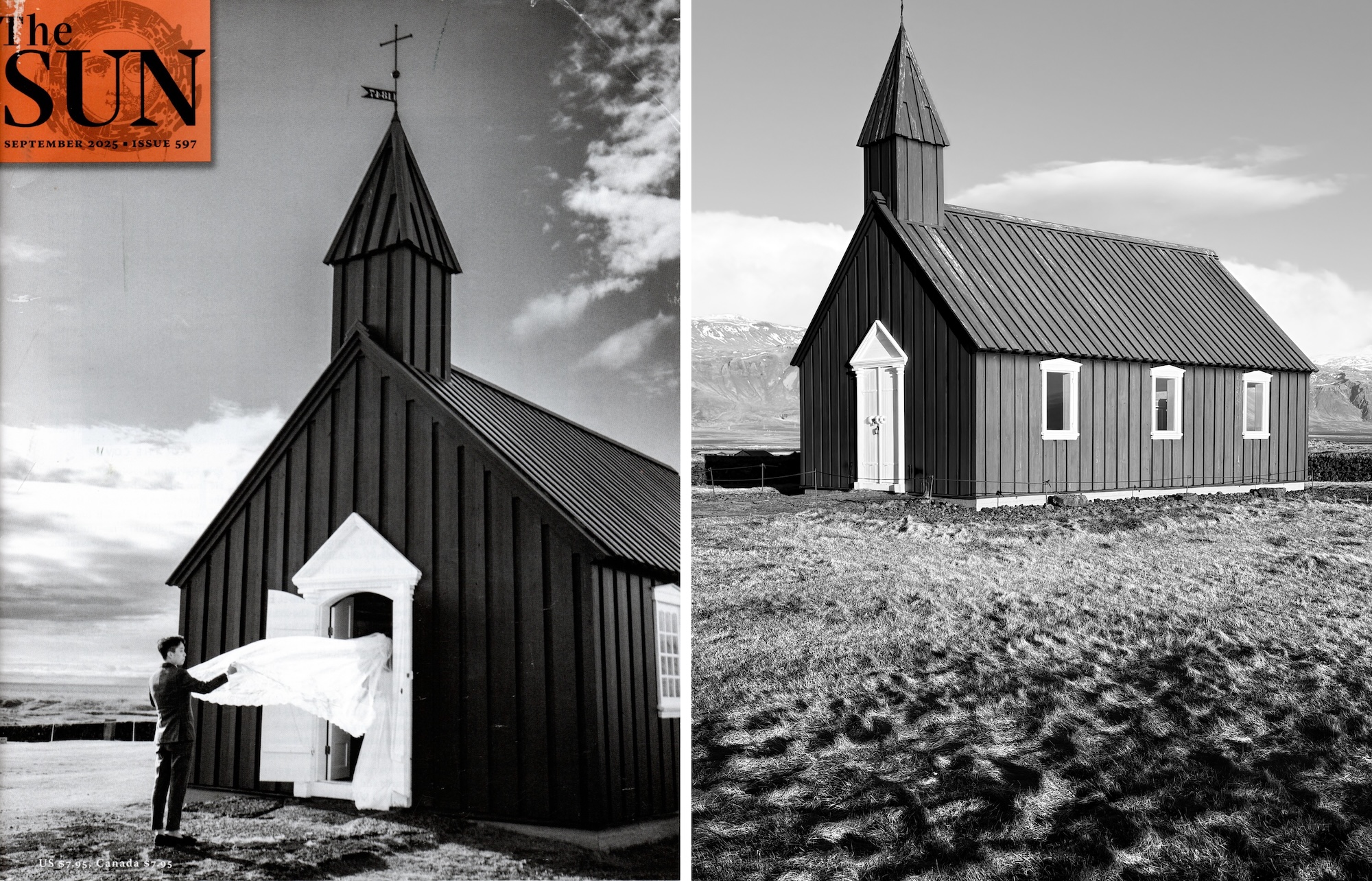
As I was planning this trip in late August, I received the September issue of my favorite magazine, The Sun (see Friendship, Camaraderie & The Sun). On its cover was picture of a bride entering a church. In the “On The Cover” description was the following: “Eric Davidore lives in the Bay Area. He shot this month’s cover photo on the Snæfellsnes Peninsula in Iceland in October 2023. He felt lucky to be visiting Búðakirkja – the Black Church – while a wedding was taking place.”
Eric’s cover photo and my amateur photo below.
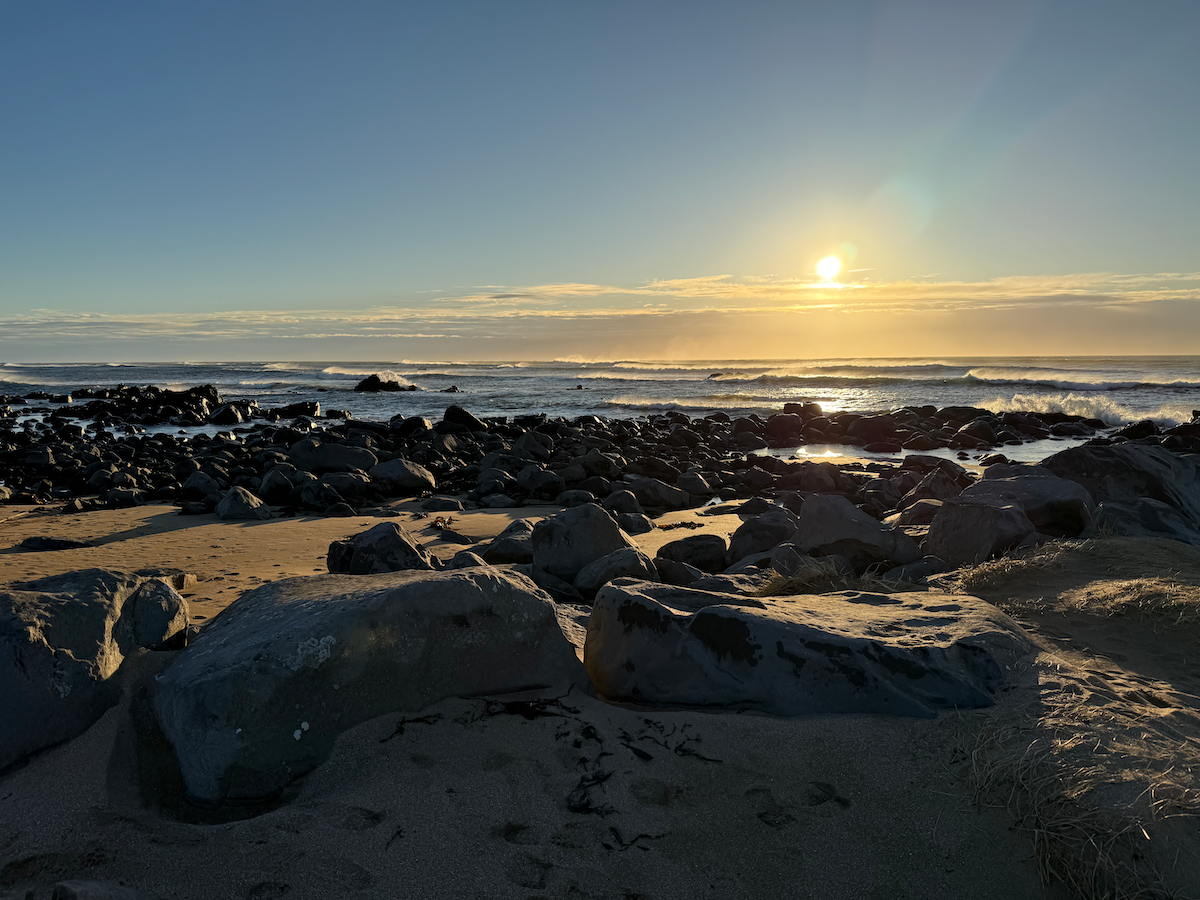
Ytri-Tunga Beach Unlike many of the black sand beaches in Iceland, this one is the exception: golden sand. It looks like this might be a sunset shot, it’s not. At this time of year the sun rides close to the horizon all day. This photo was taken at 11:34am! The Reykjavik area doesn’t have a period of true 24-hour darkness, but it does come close with short daylight hours in mid-December. The shortest day is on the winter solstice, when they have roughly 4 hours of daylight. Conversely, there is 21 hours of daylight during the summer solstice in June!
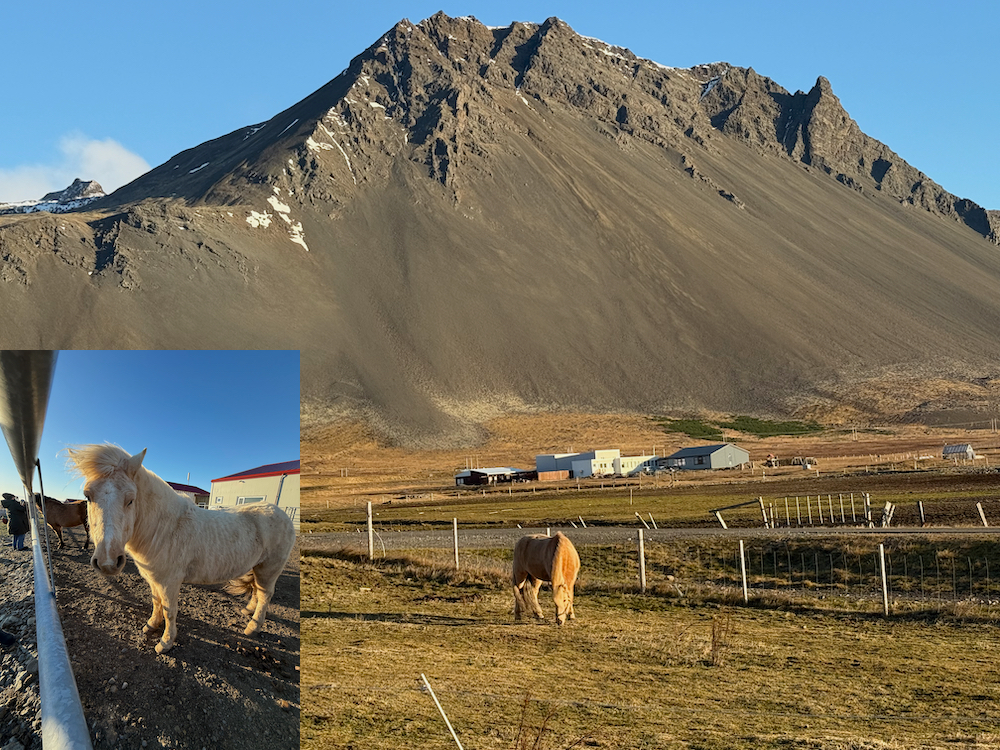
Lunch at the Sturlureykir Horse Farm. According to the site Horses of Iceland, “The horses of Iceland are the original Viking horses and one of the purest horse breeds in the world. The breed has been isolated on the rugged island in the North-Atlantic since the settlement, or over 1000 years ago, hardly any genetic input from other breeds if any at all. …Today, the most common use for the Icelandic horse is as a general riding horse.” This is a family-run farm, with a history dating back to the late 1800’s. After a hearty lunch, which included some of their home baked rye bread, prepared by the matriarch of the family, we toured the stables and corrals – but no horse rides for us today, as we still had miles to explore on this peninsula.
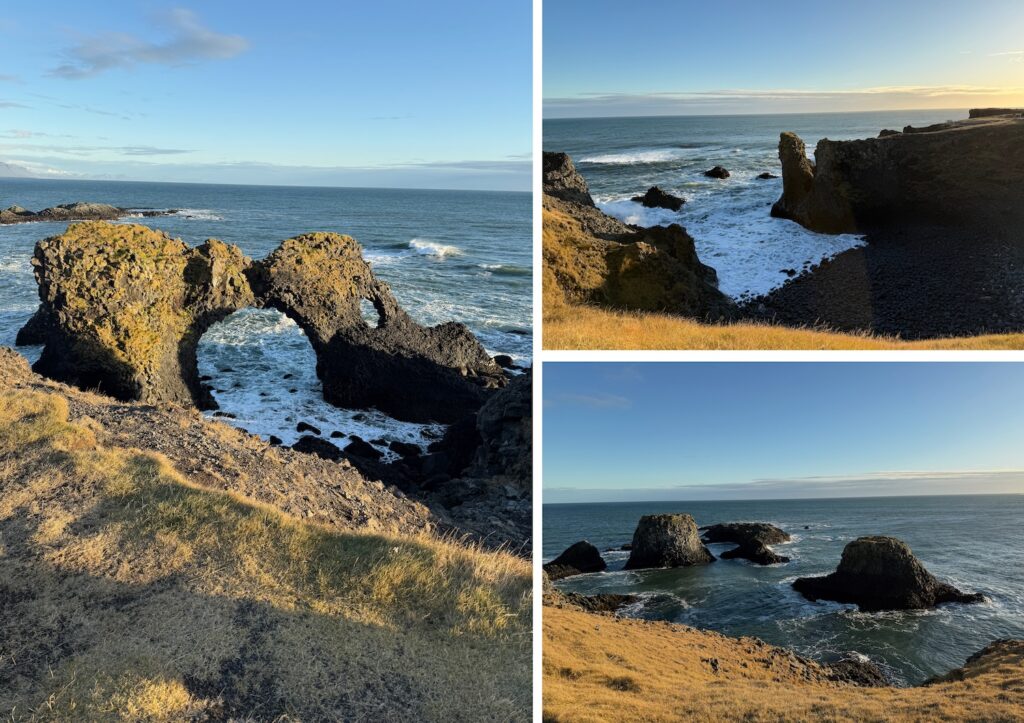
The rugged coast at Arnarstapi, on the southern side of the peninsula, is famous for its dramatic coastal cliffs, basalt formations, and the iconic Gatklettur (Hellna Arch).
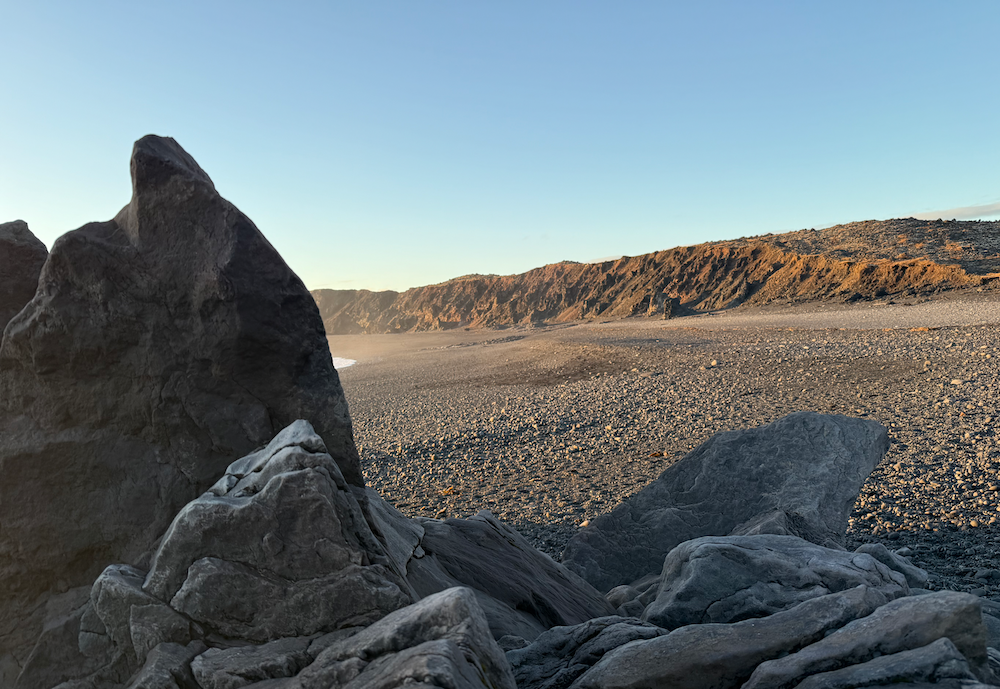
Djúpalónssandur, a black sand and pebble beach.
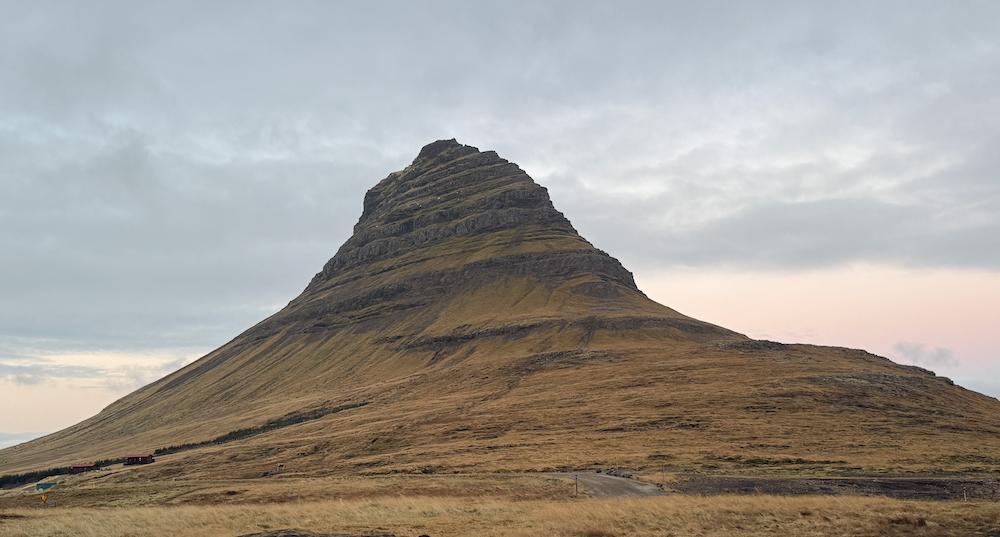
As the sun was fading, we made a quick, obligatory stop at Kirkjufell, the mountain made famous by Game of Thrones. After everything else we witnessed that day, it landed somewhere between “mildly interesting” and “well, now I’ve seen it.”
I arrived back in Reykjavik about 12 hours after starting this adventure on the Snæfellsnes Peninsula very tired and very satisfied!
Northern Lights
As I mentioned earlier, the spark for this entire trip was seeing fellow travelers’ photos of the Northern Lights. Several key conditions have to align for the aurora to appear, including:
- Strong Solar Activity
- Dark, clear skies
- Long, dark nights
- High altitude locations
- Patience and time
One of the reasons I added extra days around the Road Scholar portion of the trip was to increase my chances. If I missed the lights the first time, I wanted the chance to try, try again! Back in the summer when I was assembling my itinerary, I booked a tour that would take me deep into the backcountry of Þingvellir National Park on my third night in Iceland.
Little did I know those five conditions would come together like a perfect storm on the night of Tuesday, November 11!
A sample of what I saw on that cold, dark night.

Golden Circle+
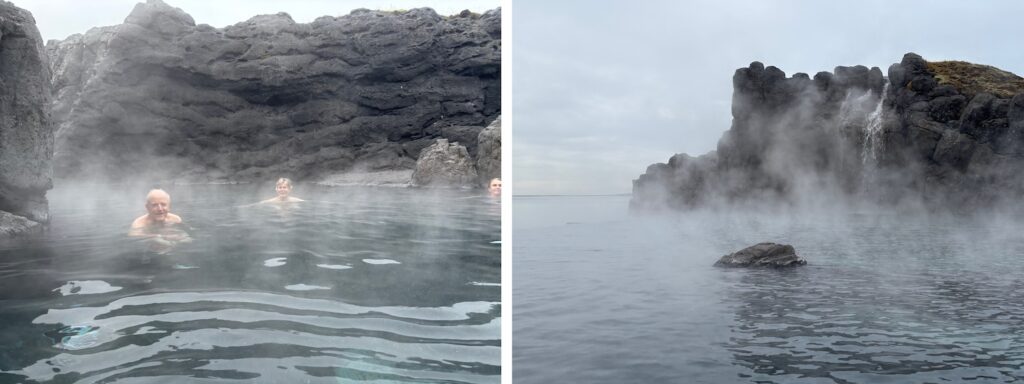
On the morning of my fifth day in Iceland, I met up with the Road Scholar group at a hotel near the airport. Many of the bleary-eyed travelers had just arrived in the country. After breakfast, all 24 of us boarded a bus to begin our adventure together. Iceland’s Golden Circle, one of the most scenic routes in all of Europe, is a 190-mile loop showcasing some of the most spectacular sights. Over the next few days, we visited three of most popular stops: 1) Þingvellir (Thingvellir) National Park, 2) Geysir Geothermal Area, and 3) Gullfoss Waterfall. And we saw much more beyond that! But our first stop, not far from the airport, was the geothermal-fed Sky Lagoon. I know many of those flight-weary folks were more than ready for such a soothing, restorative experience! (and I very much enjoyed it, too!)
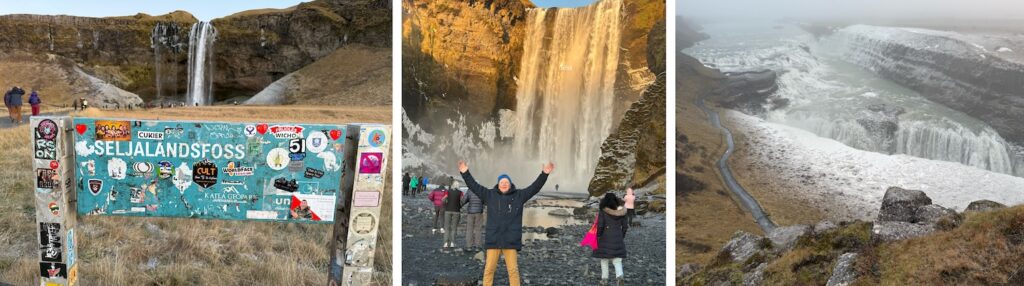
There are an estimated 10,000 waterfalls in Iceland. I visited three of the more famous and easily accessible ones: Seljalandsfoss, Skógafoss, and Gullfoss.
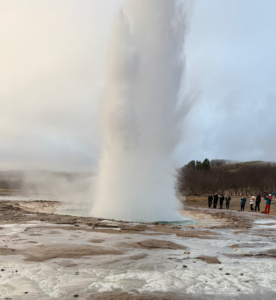
The Geysir geothermal area, home to the Strokkuur geyser, which erupts every few minutes is a “must see” stop along the Golden Circle. When I visited Yellowstone in 2018 (see Yellowstone and Grand Teton National Parks), I found Old Faithful, which is roughly twice the size of Strokkuur, interesting but less impressive than many of the park’s other geothermal features. I felt the same way here in Iceland.
According to the nature travel site Natural Habitat Adventures, “In a place known for glaciers, lava fields, short summers, and cold weather, the fact that Iceland can produce a wide variety of crops is impressive. This is largely thanks to greenhouse horticulture. Iceland’s produce is fresh and flavorful, qualities it owes to clean air, pure spring water, and volcanic soils – a wealth of renewable natural resources.”
I visited one such a place: Friðheimar’s remarkable tomato farm on the Golden Circle. Producing roughly 370 tons annually, it’s a major contributor to Iceland’s fresh tomato supply. After touring of one of the greenhouses, we sat at tables among the thickly vined tomato plants, for a lunch of tomato soup and bread. Simple, hearty, and absolutely delicious on a cold day!

Þingvellir (Thingvellir) National Park has been the nation’s most hallowed place since 930 AD when it was chosen as the site for what is often considered the world’s oldest parliament. The natural beauty of this place is stunning. It’s also one of the best places on Earth to see and feel the continental divide between the North American and Eurasian tectonic plates. Walking between those two giants, slowly pulling apart from each other at an inch each year, was an unforgettable experience.

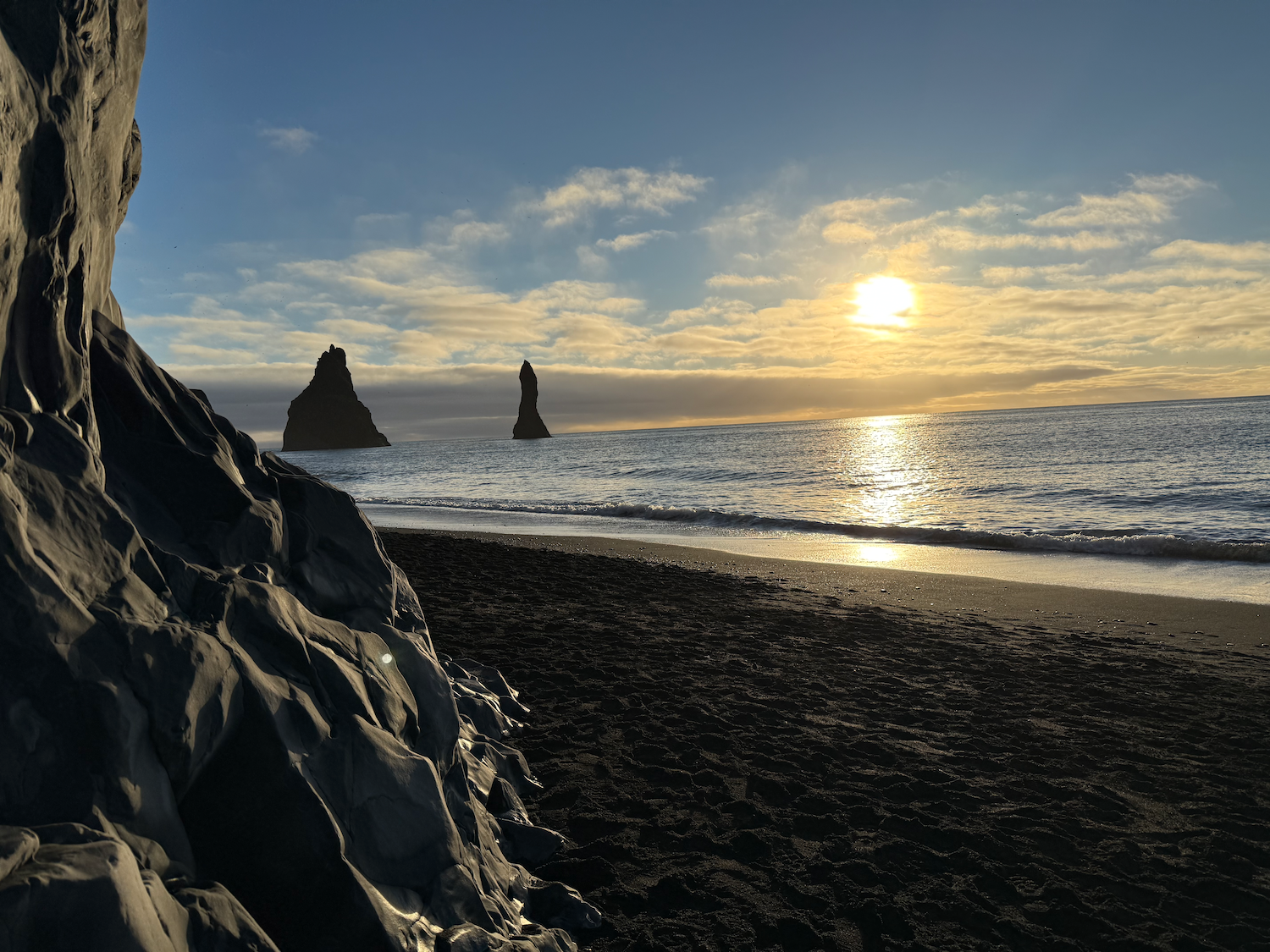
We altered course slightly, detouring off the Golden Circle to head east on the Ring Road to visit Reynisfjara (Black Beach) near the small village of Vík í Mýrdal. I had read about this place and its infamous “sneaker” or “rouge” waves, where turning your back on the sea can be perilous! As the site Nordic Visitor describes it: “Reynisfjara is without a doubt the most famous beach in all of Iceland, and you’ll see it featured on postcards and brochures throughout the country, as well as on pretty much any travel blog or video about Iceland. What sets Reynisfjara apart from all the rest are its black volcanic sands, smooth pebbles, unique rock formations, overall moody atmosphere.”
Even with all that buildup, I was completely unprepared for the sheer beauty of the place!
We arrived shortly before lunch. The tide was out, so there were no rough seas or dangerous “sneaker waves” to contend with. The beautiful blue sky, low winter sun, and black pebbled beach combined to create a striking backdrop.
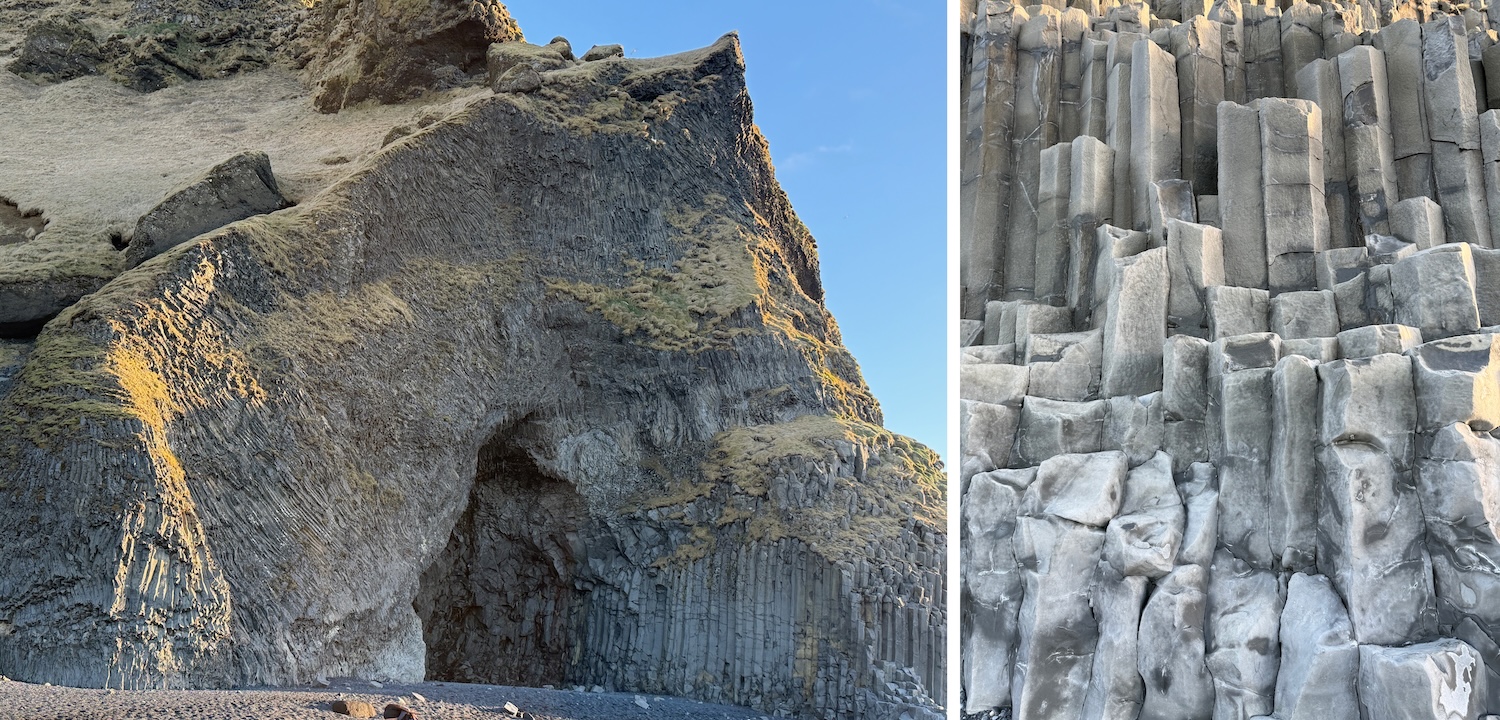
One of Reynisfjara Beach’s most distinctive features is the towering basalt columns lining the cliffs of Reynisfjall Mountain. Formed by cooling lava, these hexagonal rock formations create a dramatic and unforgettable setting. Nearby is the cave known as Hálsanefshellir. Our guide warned us not to enter, as rockfalls are very common and the area can be quite dangerous.
Museums+Other Educational Stuff
Travel itself is an intellectual experience, but what I like about the Road Scholar trips is that they dig deeper by offering experts in their fields who discuss the issues, explain the culture, and answer our questions, making the journey far more rewarding. Here are a few of the encounters we had…
The Hellisheiði Geothermal Plant is Iceland’s newest and largest of the 6 major plants in the country. Over 90% of Icelandic homes are heated by geothermal energy and geothermal contributes significantly to Iceland’s electricity, alongside hydropower. The key takeaway for me was, the USA has greater overall geothermal power generation, but Iceland is a pioneer in deep integration, using geothermal for both electricity and district heating to a degree unmatched globally.
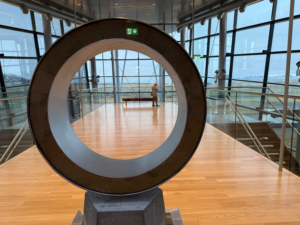
From a descriptive plaque next to the object in this photo: “From the geothermal powerplant hot water is piped to Reykjavik where it is used, among other things, for house heating. Here is a section of the pipe which is mainly above ground and has been in use since 1990. The pipeline is made of steel insulated with rock wool. It is then covered with aluminum sheets to protect it from rain and wind. The temperature of the water from the power plant is about 85°C and the heat loss to Reykjavik is less than 2°C.”
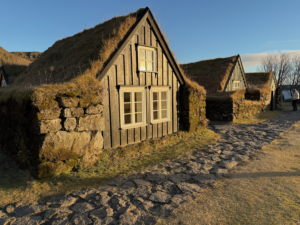
The Skógar Museum has collected and preserved more than 15,000 individual items reflecting Iceland’s cultural heritage. They include everyday household objects to elaborate period dresses and costumes, as well as the large eight-oared fishing boat Pétursey. Outside, a series of turf houses relocated from different parts of the country completes the experience.
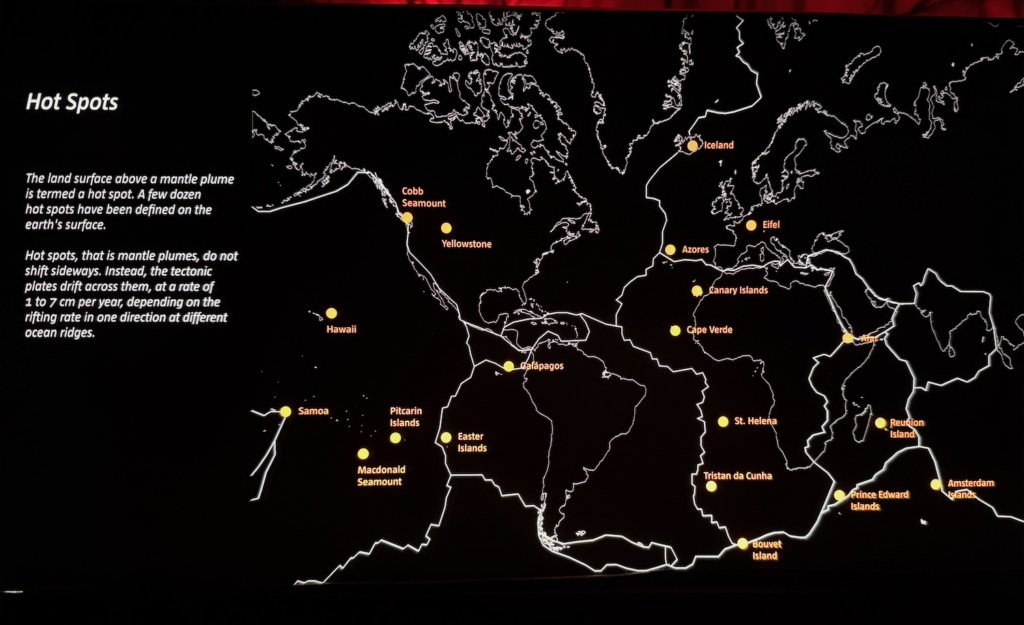
The LAVA Centre in Hvolsvöllur features an interactive exhibition exploring both the art and science of geology and Iceland’s volcanic systems. Our first stop was an interactive map in the lobby where a knowledgeable volcanologist explained the unique conditions that make Iceland prone to extreme volcanic activity and highlighted the regions most at risk for the next eruption. After watching a short film, I entered the maze-like exhibition area, where visitors can literally feel and hear the power of an eruption. A dramatic 40-foot-high structure, simulating the mantle plume and the magma flow beneath Iceland, was a real eye-opener, especially for someone who lives in sunny Florida! The photo shows a map of global volcanic activity hotspots.
LAVA TUBE
I had kept the last full day of my itinerary open in hopes of one final chance to see the Northern Lights. Since I was incredibly fortunate to witness them on my third night in the country, I suddenly had a day to fill. I booked a trip to the lava fields at Ölfus, where I hiked into the Raufarhólshellir Lava Tube.
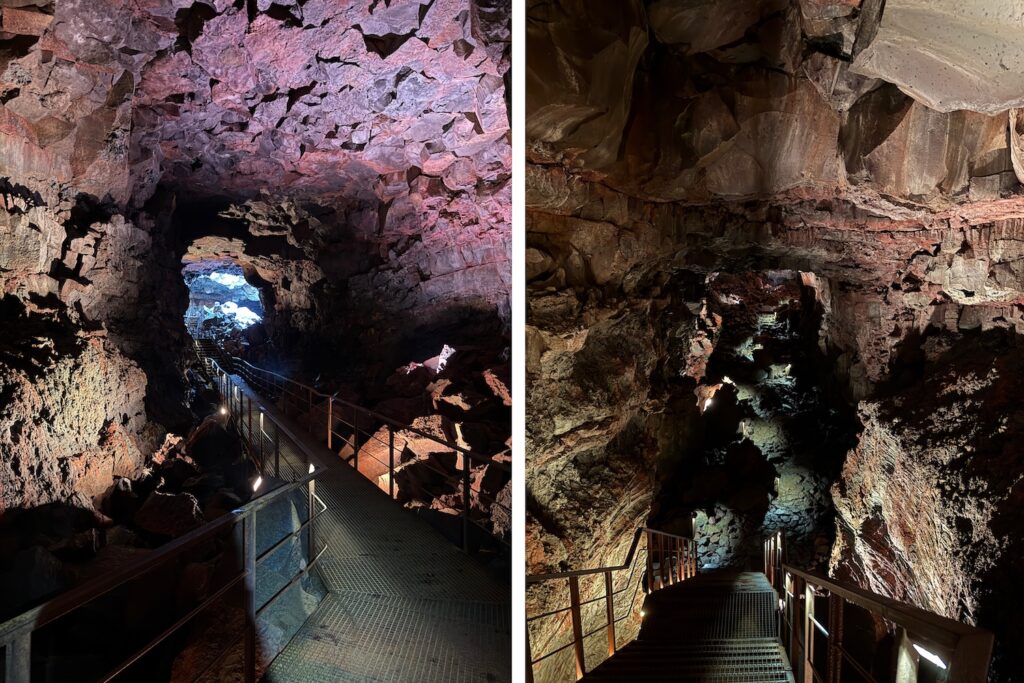
Lava tubes are underground passageways formed by flowing lava and that can transport vast quantities of molten rock beneath the surface. When an eruption ends these channels are left behind as empty caves. Raufarhólshellir is approximately 5,000 years old and, at an impressive 4.500 feet in length, is one of longest known lava tubes in Iceland.
The cave was well lit, and my helmet was also equipped with a headlamp. These photos show a very stable metal walkway, although there were some portions that required scrambling over and around small boulders. I was provided a hiking stick to help me maintain my balance, something I was glad to have! Our guide made sure I traversed the terrain safely. It was a wonderful opportunity to experience this centuries-old marvel!

Around REYKJAVIK
I mostly used Reykjavik as my “base camp,” spending a total of seven nights in the city, two with Road Scholar and five as a solo traveler. I’d like to finish up this tale and talk about Reykjavik.
Wherever you stand in Reykjavik, you’re likely to see Hallgrímskirkja and its 244-foot spire. The largest church in Iceland, it is the defining feature of the city’s skyline. The photo on the left shows the church from Skólavörðustígur (Rainbow Street). I took an elevator up to the bell tower, where I was rewarded with breathtaking 360-degree views of the city and the surrounding landscape.

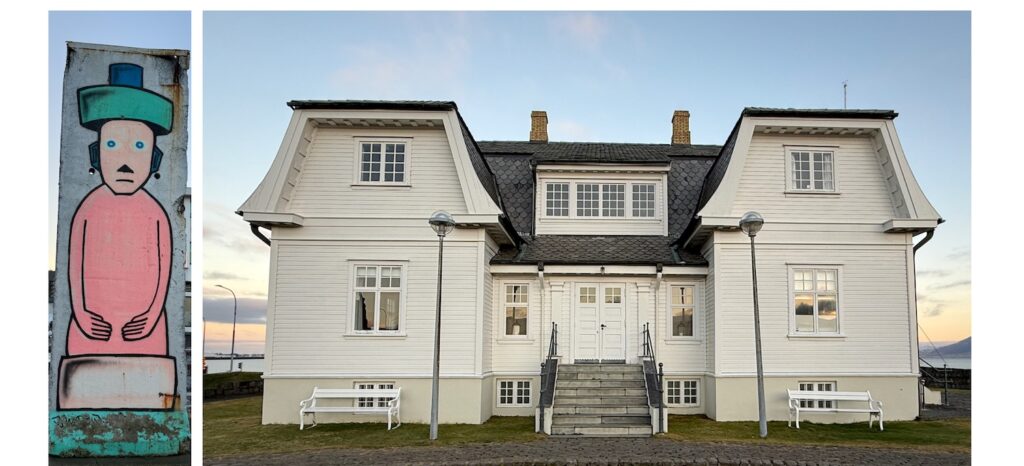
In October 1986, Ronald Reagan and Mikhail Gorbachev met at Höfði House in Reykjavik to follow up on the previous year’s Geneva Summit and to discuss possible terms for nuclear arms reduction. Although no formal agreement was reached, many historians consider the Reykjavik Summit a turning point in the Cold War. Eight months later, Reagan delivered his famous speech at the Brandenburg Gate declaring, “Mr. Gorbachev, tear down this wall!” The Berlin Wall ultimately fell on November 9, 1989. A fragment of the wall now stands at this site, as well as at the Reagan Library in California which I visited in 2018 (see Reagan Presidental Library).
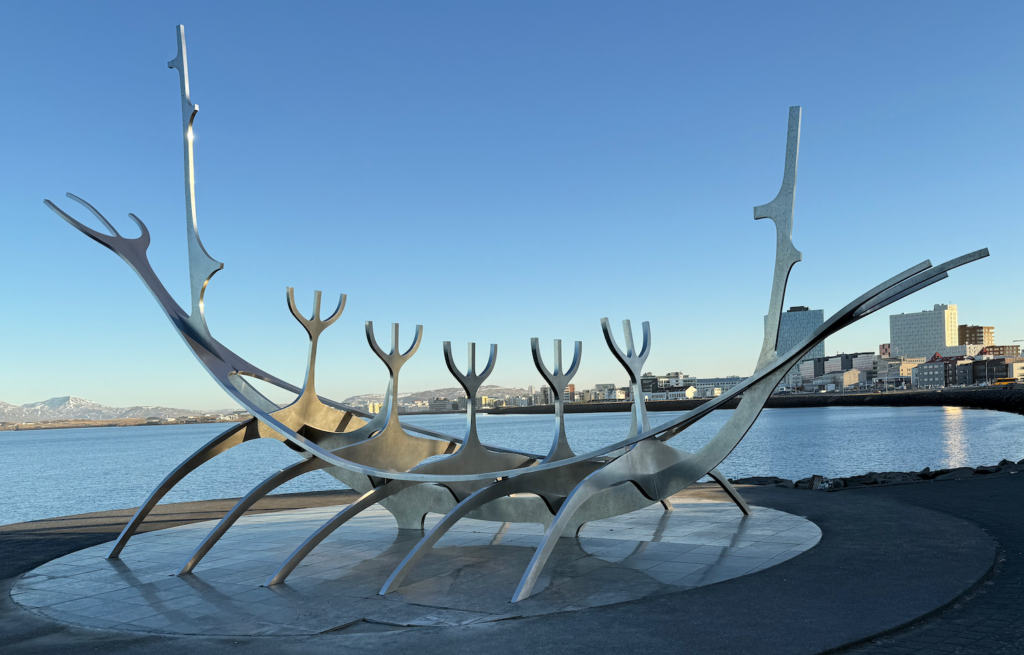
Situated along the waterfront is the Sun Voyager (Sólfar) sculpture by Jón Gunnar Árnason. It’s made to resemble a Viking ship, but it is less a literal vessel than a dream boat. An ode to hope, discovery, and the sun. The dedication plaque reads: “We all have our fantasy vessels that we dream of sailing away in, into the dream. In my ships I unite my own fantasy, precision and the knowledge that boat builders have developed throughout the ages. The sun ship gives us promise of a primeval land.”
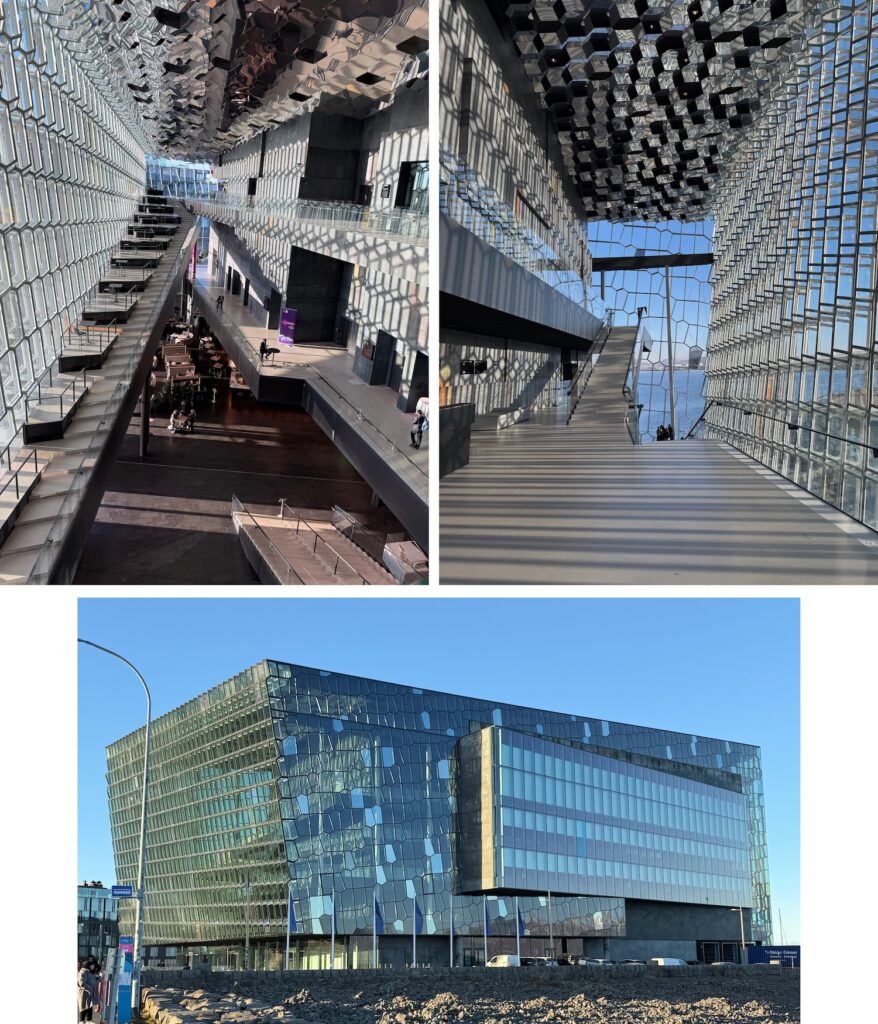
Since opening in 2011, the Harpa Concert Hall and Conference Centre has become one of the city’s most distinguished landmarks. Its striking external architecture echoes the basalt formations found along Iceland’s stormy coastlines. Inside, there are multiple levels and performance halls connected by floating staircases, or elevators if one prefers. Visiting during the day, I was stuck by how light poured in through the floor-to-ceiling glass façade, creating an extraordinary sense of openness.
I returned on two separate evenings to attend two very different events. The first was a performance by two prominent Polish artists, Jacek Karwan on the double bass and Maciej Frackiewicz on the accordion. While the pairing of instruments intrigued me, and I am by no means a music connoisseur, the avant-garde selections were not quite in my wheelhouse. Still, I was glad to have experienced the event.
The second event was a sold-out show in a different hall featuring the British standup comedian, Jake Lambert. I had a great seat, just three rows from the stage. He began by asking how many Icelanders there were in attendance, which unsurprisingly, was most of the audience. Then he asked how many Americans were there, and I was one of the very few who raised a hand. Naturally, that meant he immediately zeroed in on me. Are you living in Iceland? “No.” Where are you from? “Florida.” Oh, we know about Florida! (big laugh) Who are you traveling with? “By myself.” Let’s have a big hand for Robert! The entire room applauded and he continued to refer back to me throughout the rest of his set! Strangely, I wasn’t hesitant to raise my hand, nor was I embarrassed that I was singled out. His manner was so natural, casual, self-deprecating and genuinely funny that I just felt part of his act. Weird, huh?
Final Thought
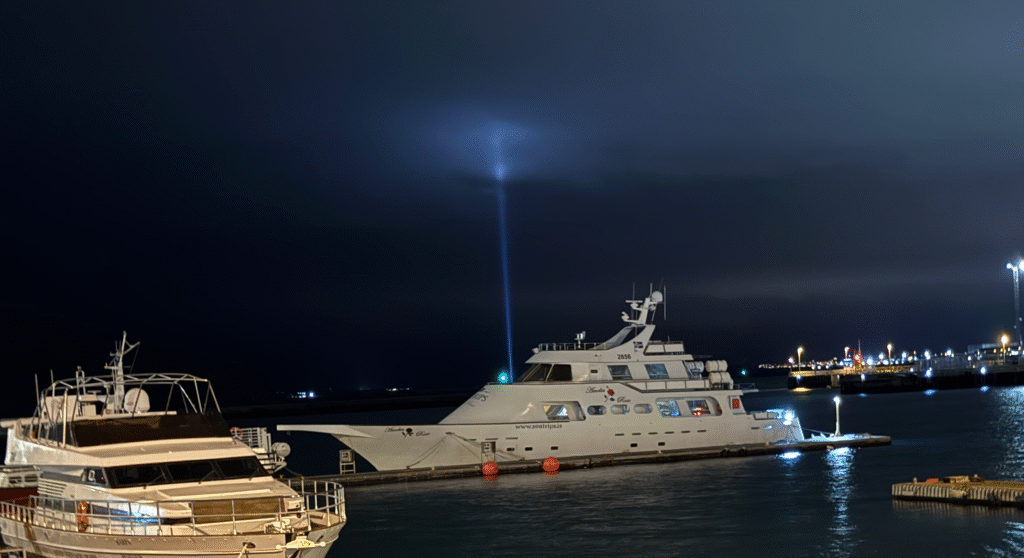
On Viðey Island off the coast of Reykjavik, there stands the Imagine Peace Tower, dedicated on October 9, 2007 by Yoko Ono in memory of her late husband, John Lennon. The monument consists of powerful searchlights which reflect through prisms to create a column of light shooting into the sky. It’s illuminated every night between October 9 (his birthday) and December 8 (the anniversary of his death).
Upon leaving a restaurant at the port a few nights before returning home, I could clearly see the beam of light. The tower serves not just as a memorial, but as a global symbol of peace. A fitting way to wrap up my visit to this land Midst Fire and Ice!